
The US Treasury Just Froze $1 Billion in Iranian Crypto — And Some Holders Still Don't Know
Iran ran crypto like a shadow central bank — until Washington pulled the plug.
The U.S. Treasury has seized nearly $1 billion in Iranian cryptocurrency under a covert sanctions campaign called Operation Economic Fury, Treasury Secretary Scott Bessent announced Thursday at the Reagan National Economic Forum in Simi Valley, California.
The kicker? Some of those wallets are still being accessed right now — by people who have no idea the funds are already gone.
“I believe that we have seized about a billion dollars of their crypto,” Bessent said. “Some of them may be typing in right now and not have realized that their wallet had been grabbed.”
What Is Operation Economic Fury?
Launched in March 2026, Operation Economic Fury is the Trump administration’s systematic campaign to sever Iran’s access to overseas revenue, banking networks, and crypto infrastructure.
The operation has escalated rapidly:
- March 2026 — Operation launches, initial wallet freezes begin
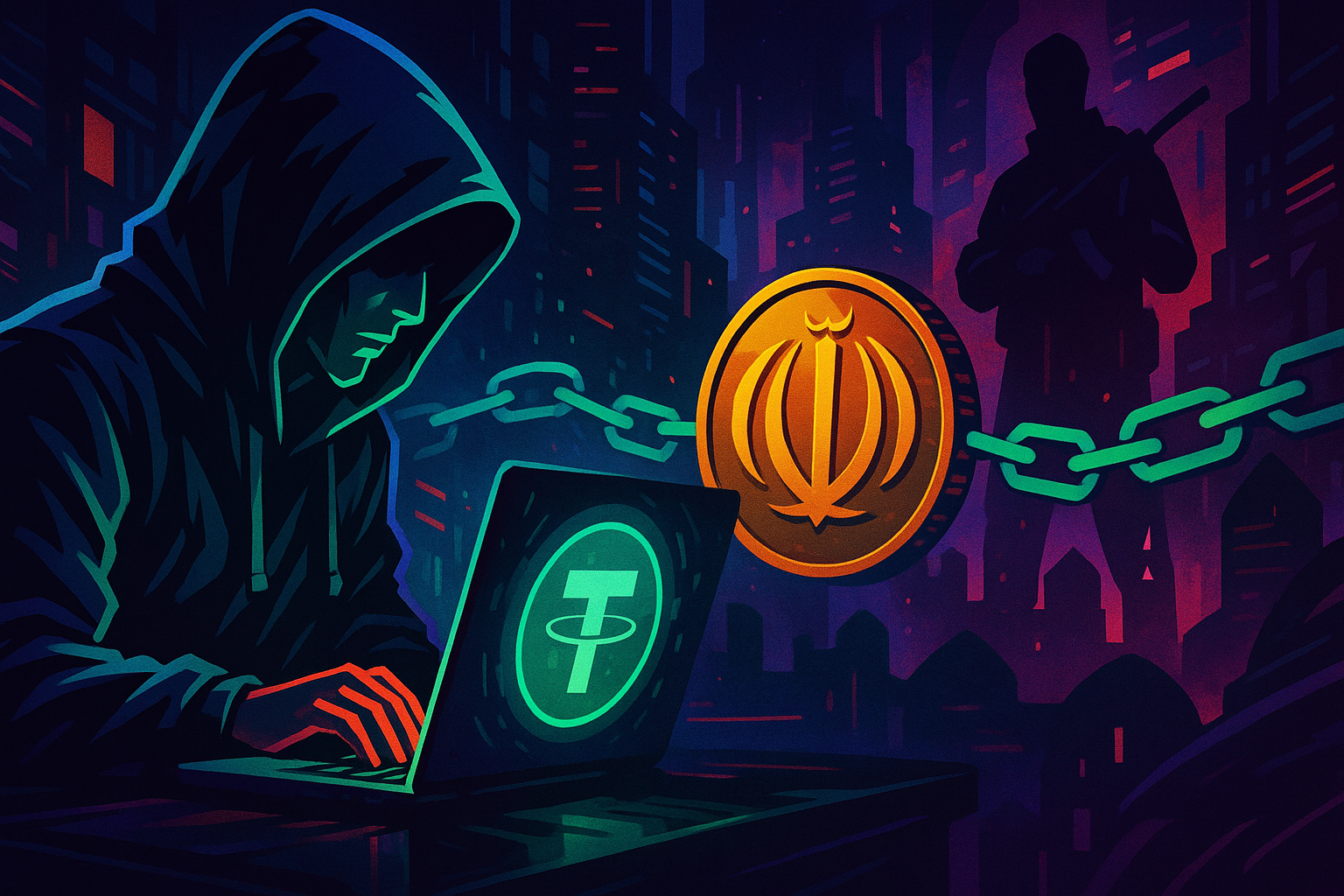
- April 24, 2026 — Tether freezes $344 million in USDT tied to two Tron blockchain addresses, following updated OFAC designations. Blockchain analytics firm Chainalysis identified the wallets.
- Late April 2026 — Cumulative seizures reach ~$500 million
- May 30, 2026 — Bessent announces the total has crossed $1 billion
The targeted assets are predominantly Tether (USDT) on the Tron blockchain — long the preferred stablecoin rail for sanctioned entities seeking dollar exposure without touching the traditional banking system.
Why Iran Was Using Crypto
Conventional sanctions locked Iran out of SWIFT and global banking. Crypto — particularly dollar-pegged stablecoins on low-fee networks like Tron — became an unofficial reserve currency for state-linked entities trying to move money internationally.
Before Operation Economic Fury, U.S. officials estimate Iran was generating $400–$500 million per month through crypto channels. That pipeline is now largely severed.
The damage to the Iranian economy is already visible: Bessent cited inflation exceeding 200% and military personnel going unpaid as indicators that the financial squeeze is working.
Tether’s Kill Switch Is Now a Geopolitical Weapon
This operation puts Tether’s centralized freeze capability under new scrutiny. Unlike truly decentralized protocols, Tether can blacklist any address holding USDT — and just did so at U.S. government direction for $344 million in a single action.
For crypto purists, this is the nightmare scenario: the world’s largest stablecoin acting as an arm of OFAC. For TradFi and compliance professionals, it’s proof that stablecoins can be brought under the sanctions regime — and will be.
Why This Matters for Crypto Jobs
Operation Economic Fury isn’t just geopolitics — it’s a hiring signal.
Roles that are booming right now:
-
Blockchain Analytics / Sanctions Investigator — Chainalysis, TRM Labs, Elliptic, and government contractors are expanding teams specifically to trace and attribute sanctioned wallets. Demand has spiked as governments worldwide replicate the U.S. playbook.
-
Crypto Compliance Officer — Every exchange, OTC desk, and custodian that handles USDT now has to ask: are my users on an OFAC list? Firms are building dedicated sanctions-screening functions.
-
OFAC / FinCEN Regulatory Counsel — The intersection of crypto and sanctions law is one of the hottest legal specialisms in 2026. Deep knowledge of both digital asset infrastructure and OFAC framework is rare and extremely well compensated.
-
Smart Contract Security / Wallet Infrastructure — Nation-state adversaries will look for ways around freeze mechanisms. Defensive infra roles at stablecoin issuers and custodians are getting serious budget.
The broader message: crypto compliance is no longer a checkbox function — it is a front-line national security role. Firms that treated it as overhead are racing to hire.
The Bottom Line
The U.S. government just demonstrated it can reach into the blockchain and silently drain a billion dollars from adversarial wallets — with owners none the wiser until they check their balance.
That changes the risk calculus for everyone: sanctioned entities can no longer rely on crypto as a safe haven, and every stablecoin issuer now knows their freeze function is a de facto policy tool.
Operation Economic Fury is still running. The next target isn’t announced in advance.
Looking for your next role in crypto compliance, blockchain analytics, or sanctions tech? The demand has never been higher. Browse open positions at cryptogrind.com and get ahead of the hiring wave before the next wallet gets grabbed.
Discussion
Comments are powered by GitHub. Sign in with your GitHub account to chime in.