Russia Sanctioned a 17-Year-Old for His Crypto Research Paper — He Was Sitting in Class When He Found Out
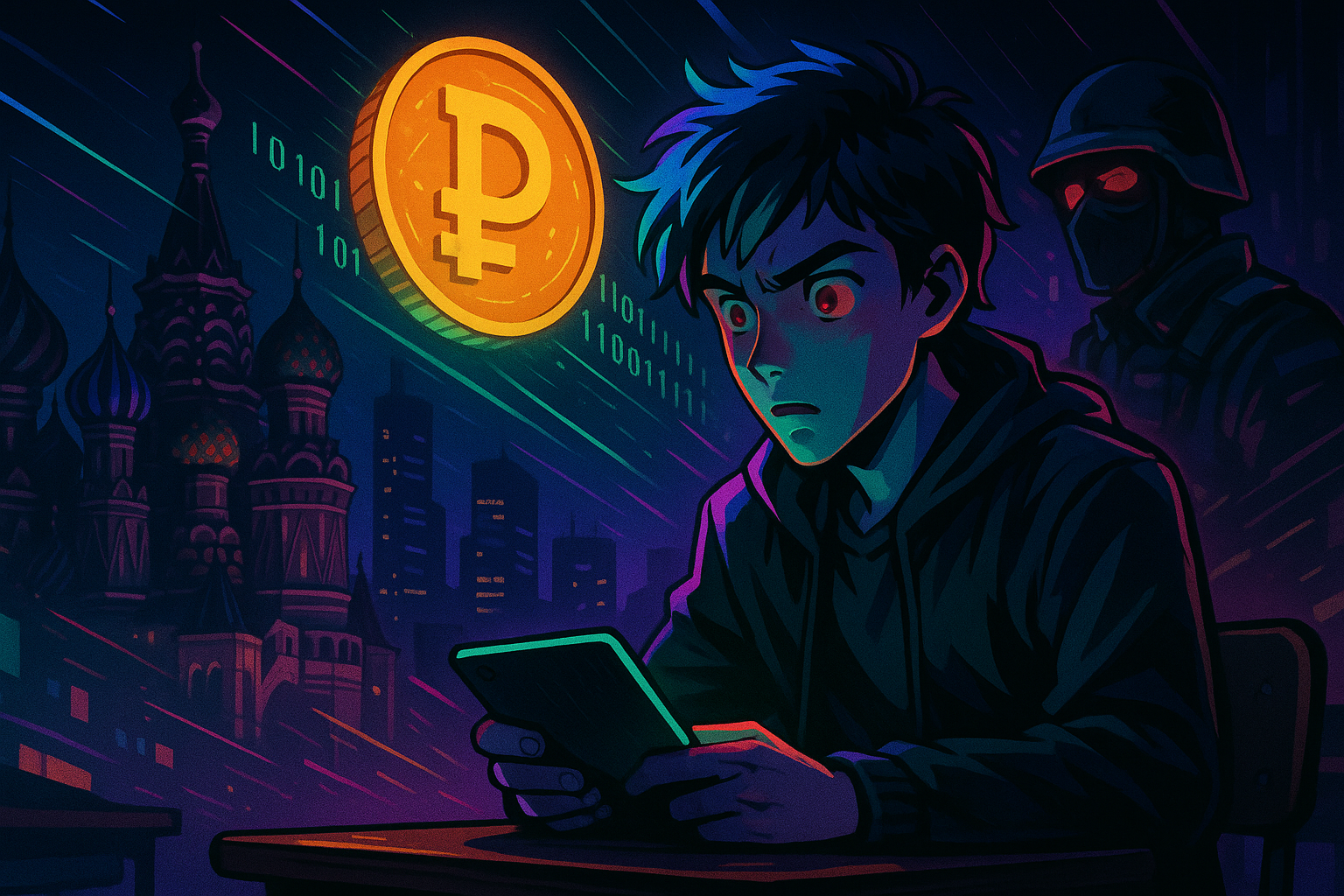
A 17-year-old British high school student published a research report on Russia’s crypto money laundering network. Russia’s response: sanction him.
On June 4, 2026, the Russian Foreign Ministry added Alexander Browder — son of Bill Browder, Putin’s self-described “Enemy Number One” — to its official sanctions list. He was reportedly sitting in class when he found out.
“A badge of honour,” Alexander posted on X. “Proud to be the first high school student in the world to ever be sanctioned by an authoritarian regime for uncovering corruption.”
He may be right about that.
What the Teenager Did
In March 2026, Alexander published a report through the Henry Jackson Society think tank titled “Confronting the Illicit-Finance Hydra in Crypto Markets: Protecting Retail Investors and Disrupting Hostile Government Exploitation.”
The report’s central claim: approximately $350 billion has been laundered through crypto markets by hostile states — Russia, Iran, and North Korea chief among them.
The linchpin of the Russian operation, according to the report: a ruble-backed stablecoin called A7A5.
Russia’s Foreign Ministry called it “defamatory speculations and false information” and banned Alexander — along with four other British nationals — from entering Russia. That’s a sanction that carries all the weight of a lifetime ban on Aeroflot and not much else. But the message is clear.
A7A5: Russia’s Shadow Dollar
A7A5 isn’t some obscure DeFi experiment. It’s a state-adjacent financial instrument that emerged specifically because Russia got cut off from SWIFT, Visa, and Mastercard after the 2022 Ukraine invasion.
Here’s the structure:
- Issuer: A7, a Russian crypto company 49% owned by Promsvyazbank — a Russian state bank currently under Western sanctions
- Blockchain: Primarily Tron (99% of circulation), with some Ethereum presence
- Circulating supply:
39 billion tokens ($510 million USD) - Volume: Estimated $90+ billion moved in the past year
- Legal status: Russia’s central bank officially recognized A7A5 as a “digital financial asset” in October 2025, effectively legalizing its use in foreign trade
In plain terms: Russia built a dollar substitute backed by rubles, anchored to a state-owned bank, running on Tron — and it processed nearly a hundred billion dollars in the last year alone.
The UK noticed. In May 2026, the UK Foreign Office sanctioned A7A5’s issuer alongside Huobi/HTX for Russian sanctions evasion — a first. That was weeks before Moscow decided to sanction a teenager in response.
The Browder Connection
The family context makes this story stranger than fiction.
Bill Browder — Alexander’s father — is the American-born British financier who hired Sergei Magnitsky, the Russian lawyer who uncovered a $230 million tax fraud by Russian officials, was arrested, and died in a Moscow prison in 2009. Bill Browder spent the next decade getting the Magnitsky Act passed in the U.S. and dozens of other countries, creating a global framework for sanctioning human rights abusers.
Russia has been trying to get Bill extradited for years via Interpol notices. Putin has called him “the main financier of opposition activity” in Russia.
Now they’ve sanctioned his 17-year-old son — over a think-tank research paper.
Alexander reportedly didn’t even tell his school what he was working on. His teacher found out the same way everyone else did.
Why This Matters for Crypto
The A7A5 story is a preview of the regulatory battleground for the next decade.
Nation-states are using crypto not as a fringe workaround but as sovereign financial infrastructure — deliberately designed to be beyond the reach of SWIFT, correspondent banking, and Western compliance systems. A7A5 processed more volume last year than many mid-tier national currencies. It did it on Tron, pseudonymously, with Promsvyazbank backing it in the shadows.
The reaction to Browder’s report — from both the UK (sanctions on A7A5) and Russia (sanctions on a teenager) — suggests that crypto-based sanctions evasion is now a top-tier geopolitical issue, not just a compliance footnote.
That means enforcement is coming. Hard.
Why This Matters for Crypto Jobs
Every time a nation-state gets caught laundering money through crypto, the demand for people who can trace it, block it, or legislate against it spikes.
Roles hiring right now because of this:
- Blockchain Analytics / AML Investigators — Chainalysis, Elliptic, TRM Labs, and their government clients are all expanding. The more complex the evasion technique, the more senior (and better-paid) the analysts they need.
- Sanctions Compliance at Exchanges — Any centralized exchange with global exposure now needs dedicated Russia/Iran/North Korea sanctions desks. That wasn’t true three years ago.
- Policy and Regulatory Affairs — The UK just sanctioned a crypto company in a novel way (targeting the stablecoin issuer directly). Law firms and crypto lobbying shops are hiring fast to figure out what comes next.
- Smart Contract Auditors — Tracing funds through Tron-based DeFi requires people who can read bytecode, not just run Chainalysis queries.
If you’re a developer who understands DeFi mechanics and can also speak compliance language, you’re rare — and right now, you’re in demand at every major exchange, government contractor, and financial crime unit in the Western world.
Looking for a job in crypto compliance, blockchain analytics, or Web3 regulation? Browse open roles at cryptogrind.com — the job board for crypto builders.


Discussion
Comments are powered by GitHub. Sign in with your GitHub account to chime in.