
MEXC's Terms Banned Iran. FinCEN Says It Moved $1B Directly With 40+ Iranian Exchanges, and Now the US Is Cutting It Off
MEXC’s user agreement says people in Iran can’t use the platform. According to the US Treasury, the exchange still traded more than $1 billion directly with over 40 Iranian crypto exchanges.
On Friday, November 6, FinCEN issued an order against MEXC Global, the Seychelles-incorporated exchange that Treasury ranks among the 20 largest in the world by volume. Once it takes effect, US financial institutions will be barred from sending money, crypto included, to or from MEXC. The order’s headline number is $16.7 billion in “likely illicit activity” moving through the exchange since May 2021.
The detail that stands out comes from the order itself. A North Korean money launderer whose specific crypto addresses had been sanctioned by OFAC in April 2023 received about $350,000 through MEXC between June and September 2025. That was more than two years after his addresses went on a public blacklist.
What Happened
Sourced from FinCEN’s order, The Block, AML Intelligence, Bitcoin.com News and Blockonomi:
- The tool: FinCEN used Section 9714 of the Combating Russian Money Laundering Act to name MEXC Global a financial institution of primary money laundering concern in connection with Russian illicit finance. It then imposed a special measure that prohibits covered US financial institutions from transmitting funds to or from MEXC.
- Timing: The ban takes effect 30 days after the order is published in the Federal Register, so it isn’t in force yet.
- Scope: The order covers MEXC’s network of entities, including MEXC Global Ltd and MX Global Ltd (Seychelles), MEXC Estonia OÜ, GIDA Technology AG (Switzerland) and MXC Global Ltd (UK). Any US-based affiliates are expressly excluded.
- Context: Treasury announced the order as part of Operation Economic Outcast, its Iran sanctions-evasion campaign. It came alongside a separate action against eight Canadian money-exchange firms accused of serving Iranian entities.
Treasury Secretary Scott Bessent, in a statement quoted by The Block: “Financial institutions cannot have it both ways: Either you support the Iranian regime, or you have access to the U.S. financial system.”
The Receipts, From FinCEN’s Own Order
FinCEN says these figures come from blockchain analysis plus public and non-public information. Unless noted, each covers May 2021 to May 2026. They are allegations, not court findings.
Russia
- About $1.5 billion in direct and indirect exposure to Russian sanctions evasion, including $232 million in direct transactions with entities sanctioned by the US, EU and/or UK.
- About $129 million with Garantex and $4.1 million with its successor Grinex, all after those exchanges were designated. FinCEN says MEXC was still transacting with both as recently as June 2026.
- At least $26 million benefiting the sanctioned A7 Network and almost $200 million connected to A7A5, the ruble-backed stablecoin.
- More than $13 billion (May 2018 to July 2026) with at least four high-risk exchanges sanctioned by the UK for helping Russia evade sanctions and fund its war in Ukraine.
Iran and its proxies
- Nearly $2 billion connected to Iranian actors or known or suspected terrorist groups, including about $1.87 billion with exposure to Iran.
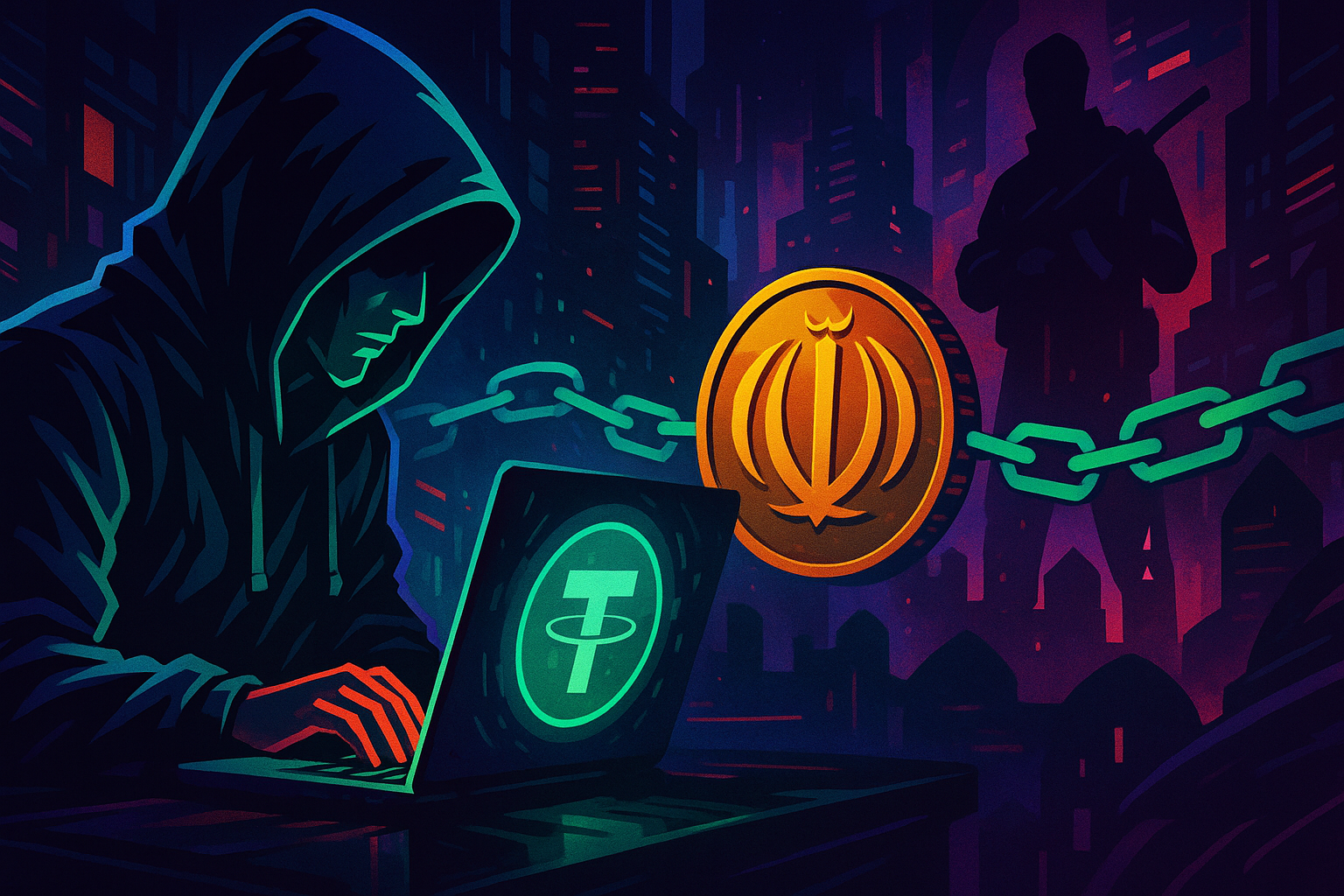
- More than $1 billion of that in direct transactions with 40+ Iranian exchanges, despite a user agreement that bars people in Iran.
- About $22 million tied to the Central Bank of Iran and the IRGC’s Quds Force.
- About $36 million to or from wallets tied to Hamas’s Al-Qassam Brigades and other Iran-linked groups.
North Korea
- About $350,000 received by OFAC-designated DPRK launderer Sim Hyon Sop in mid-2025, through addresses OFAC had published when it sanctioned him in 2023.
Cybercrime
- At least $1.99 billion to or from illicit cyber actors, which FinCEN says averages more than $1 million a day.
- More than $37.9 million in suspected ransomware payments (January 2022 to July 2024), with exposure to more than 125 ransomware strains.
- $8.5 million tied to Russian darknet markets.
The order also notes that MEXC has no virtual asset license in the Seychelles, where it is incorporated. The Seychelles FSA took enforcement action against MX Global Ltd in May 2026, and regulators in Hong Kong and Japan have previously warned that it was operating without a license.
Not a Sanctions Designation, but Close
This is not an OFAC sanctions listing. US persons aren’t being told to freeze MEXC assets. What changes is that banks, payment processors and US-regulated crypto firms lose the ability to move money to or from MEXC. For an offshore exchange, that means losing the on- and off-ramps that touch the dollar system.
According to Blockonomi, MEXC says it is reviewing the order with its legal and compliance teams, that operations are normal and customer assets are secure, and that it has started an independent review of its AML and sanctions controls and will engage with FinCEN. Coverage summarizing CEO Vugar Usi’s comments says deposits and withdrawals have kept running, with withdrawal volume up but orderly.
The spillover is already visible. Wu Blockchain relayed community reports of MEXC-linked deposits being delayed or held at OKX, Binance and other exchanges. Blockonomi stresses that no exchange has confirmed blanket restrictions. Bitget Wallet reportedly stopped accepting MEXC-originated funds for card top-ups.
If you hold funds on MEXC, the 30-day window starts at Federal Register publication, not today. Don’t wait for the deadline to find out whether your off-ramp still accepts MEXC transfers.
Why This Matters for Crypto Jobs
1. Section 9714 has now been used against a top-20 exchange. FinCEN used it against Bitzlato in 2023, and last month it proposed a funds-transmittal ban on the A7 Network’s sub-agents. MEXC is far bigger: about $1B a day in volume and, per FinCEN, roughly 9% of global centralized exchange market share as of December 2025. Every offshore exchange with loose KYC and leftover exposure to Russian or Iranian counterparties is redoing its risk review this weekend. That means demand for sanctions compliance officers, AML analysts, MLROs and blockchain investigators, and the ones who can show a regulator proof the controls work will command premium pay.
2. “Banned on paper” no longer counts as a defense. FinCEN’s case rests on the gap between MEXC’s user agreement and its onchain flows. Expect exchanges to hire for onchain screening, transaction monitoring tuning and geofencing engineering: the people who make sure the wallets your terms of service ban actually get blocked.
3. Counterparty risk is now a full-time job. Every exchange, OTC desk, payment processor and wallet that touches MEXC flows has to decide what to do with them in the next 30 days. Treasury ops, risk and correspondent-relationship roles at compliant venues are about to get busier.
4. MEXC staff may be on the market. If the cutoff leads to cuts or restructuring, experienced exchange engineers, listings people and market-makers could start looking. Compliant firms hiring for those roles should be watching.
The Bottom Line
FinCEN says MEXC told the world it blocked Iran and North Korea while moving more than $1 billion with Iranian exchanges, still trading with Garantex in June 2026, and paying out to a launderer whose addresses were already public. Washington’s answer is to cut the exchange off from the dollar system. For the rest of offshore crypto, the message is that a compliance policy only counts if the onchain flows match it.
Compliance, AML and onchain forensics are some of the steadiest hiring tracks in crypto, and this order just raised demand again. Browse open roles on Cryptogrind →


Discussion
Comments are powered by GitHub. Sign in with your GitHub account to chime in.