
Senate Drops 309-Page Crypto Law at Midnight — Democrats Are Blocking It to Stop Trump From Cashing Out
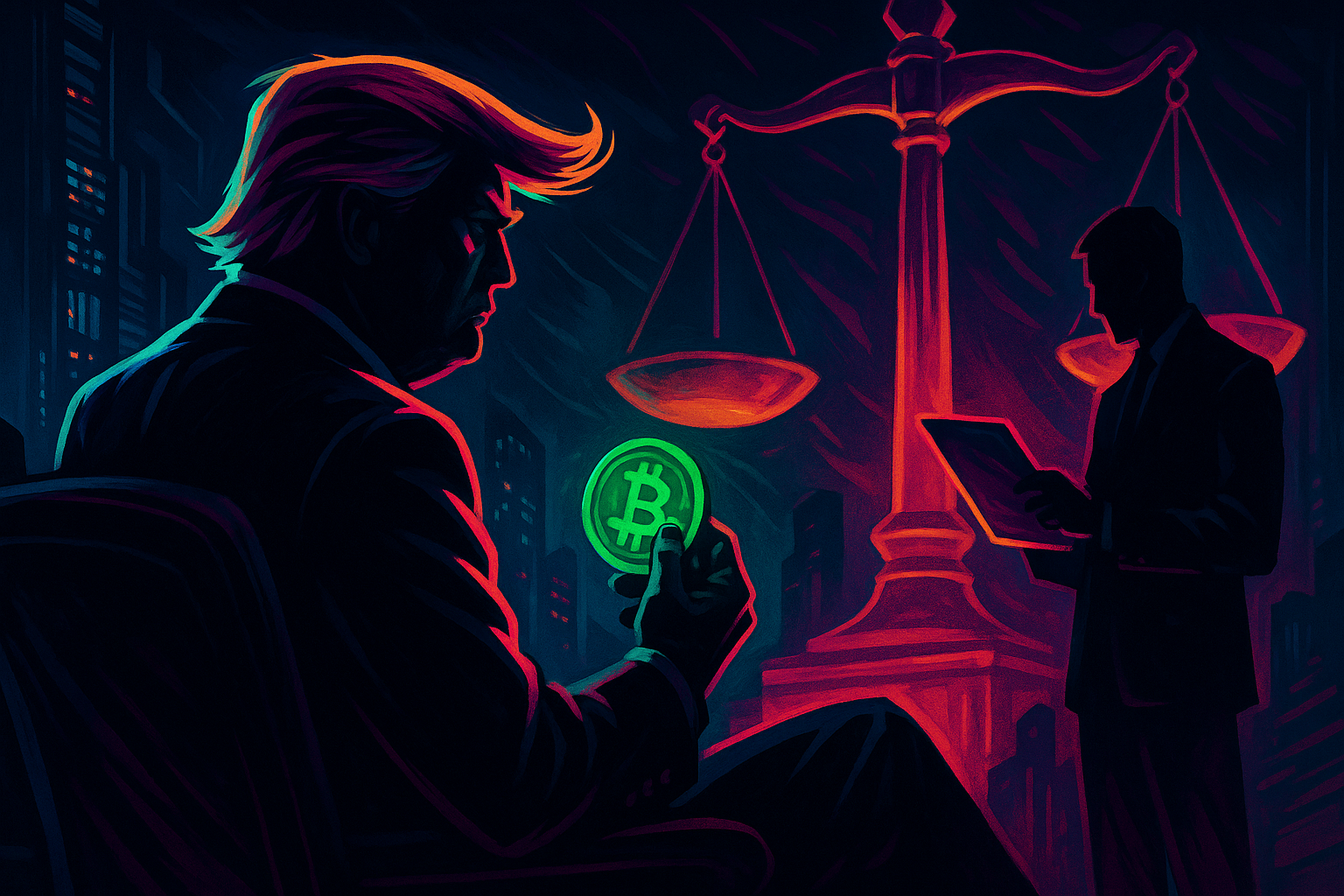
Congress is two days away from the most important crypto vote in US history. The bill passed the House 294-134. The industry has been lobbying for it for years. And Democrats are threatening to kill it — because Republicans refused to add one clause that would stop Trump and his team from personally cashing in on the industry they’re now regulating.
At just after midnight on Tuesday, the Senate Banking Committee dropped the full 309-page text of the Digital Asset Market Clarity (CLARITY) Act — the most sweeping overhaul of US crypto law ever put to a committee vote. The committee meets Thursday at 10:30 AM ET to mark it up.
Polymarket currently prices it at 75% odds of becoming law in 2026. The White House is targeting July 4 — America’s 250th birthday — for Trump’s signature. And the whole timeline could collapse over a missing page.
What’s in the 309 Pages
The bill is organized into nine titles. The short version: it gives crypto everything the industry has been asking for since 2017.
The headline wins:
-
SEC exit ramp for tokens. An “ancillary assets” classification lets tokens that started as securities graduate out of that status once their network is sufficiently decentralized. A new “Regulation Crypto” exemption allows raises up to $50M annually with reduced disclosure requirements.
-
DeFi clarity. Title III defines which DeFi protocols are “non-decentralized” based on actual control metrics — and explicitly says nodes, validators, and security councils don’t count as controllers. For the first time, US DeFi builders have a legal framework instead of enforcement-by-lawsuit.
-
Stablecoin rules. The Tillis-Alsobrooks yield compromise survives intact in Section 404: passive “hold and earn” yield on payment stablecoins is banned. Activity-based rewards — tied to real transactions, volume, or platform use — are permitted. Banks hated this compromise and formally objected May 9. It didn’t change.
-
Developer protections. Title VI explicitly exempts software developers and network participants from securities liability. The Keep Your Coins Act is folded in, protecting self-custody rights nationwide.
-
NFT safe harbor. NFTs are exempt from securities laws unless they specifically involve investment contracts.
-
Bankruptcy protection. Ancillary assets and digital commodities are classified as customer property in bankruptcy proceedings — the direct response to the FTX collapse.
The One Thing Republicans Refused to Include
Nine titles. 309 pages. Zero ethics provisions.
That’s the number that matters.
Democrats have one demand: add language barring senior government officials from personally profiting off the crypto industry while they’re regulating it. They have the public on their side — 73% of voters support such restrictions.
Republicans declined. The reason is obvious to anyone following Trump’s crypto dealings: an ethics clause strong enough to satisfy Democrats would almost certainly apply to the Trump family’s extensive crypto portfolio and the $TRUMP meme coin that’s been trading since January 2025.
“CLARITY needs an ethics provision barring senior government officials from profiting off the industry while regulating it,” Senator Kirsten Gillibrand — co-sponsor of Title I of the bill itself — said publicly. Senator Adam Schiff (D-CA) has been more direct, explicitly naming Trump family dealings as the target.
This isn’t a fringe position. Senator Ruben Gallego (D-AZ) is the swing vote who hasn’t committed publicly. Even Senator Thom Tillis (R-NC) — the Republican most likely to cross over — is being watched for whether he’d accept watered-down ethics language.
The Political Math
The Senate Banking Committee has 13 Republicans and 11 Democrats. Republicans can pass this on a party-line 13-11 vote Thursday. That gets the bill to the Senate floor — where it needs 60 votes to break a filibuster.
Do that math: Republicans hold 53 seats. They need 7 Democratic crossovers for cloture. A party-line committee markup tells you almost nothing about whether those 7 exist. Galaxy Research puts full-passage odds at roughly 50% for 2026. The committee vote Thursday is not the finish line — it’s just proof of life.
The calendar creates real urgency. If the bill misses the May 21 Memorial Day recess window, it collides with summer appropriations and the 2026 midterm cycle. The next realistic legislative window could be 2027 or later. This is the shot.
What Brian Armstrong Actually Did
Four months ago, Coinbase CEO Brian Armstrong pulled support for this bill entirely — specifically over the stablecoin yield provisions. That halt froze the Senate markup. Nothing moved.
On May 1, Armstrong reversed course after personally reviewing the updated draft with SEC Chair Paul Atkins and Treasury Secretary Scott Bessent. The yield compromise survived that meeting unchanged. Armstrong endorsed it anyway.
The calculation: Coinbase is a regulated exchange that wants regulatory certainty above everything else. A world where the bill passes without activity-based yield is better than a world where no bill passes and the SEC sues you at will. The company will find other ways to monetize stablecoin flows.
That reversal is what put May 14 on the calendar.
What Happens Thursday
Three possible outcomes:
Bipartisan markup (14+ votes): At least one Democrat crosses over on an ethics amendment deal. The bill passes with genuine momentum. Senate floor passage odds jump significantly. July 4 signing is plausible.
Party-line markup (13-11): The bill passes but Democrats are locked out. Gets to the floor but the 60-vote threshold is a coin flip. July 4 is off the table. Realistic signing slips to October or 2027.
Collapse: Amendment chaos, a Democratic boycott, or a surprise defection kills the markup. The bill is dead until after midterms. Crypto markets reprice downward.
Bitcoin is consolidating around $80,000-82,000 right now. The last all-time high was ~$126,000 in October 2025. A clean bipartisan Thursday vote is the single biggest near-term catalyst for institutional capital to rotate back in.
Why This Matters for Crypto Jobs
The CLARITY Act isn’t just regulation — it’s a hiring signal. Here’s what Thursday’s vote means for your career:
Compliance and legal are about to explode. Title II alone — bringing crypto exchanges under Bank Secrecy Act AML/CFT requirements — creates a massive compliance buildout at every major exchange, DeFi platform, and crypto ATM operator. If you have AML, KYC, or FinTech legal experience, your résumé is suddenly worth a lot more.
DeFi developers finally have a framework. The bill’s “non-decentralized” DeFi definition creates legal certainty that didn’t exist before. Projects that have been operating in regulatory gray zones can now build compliance into their architecture. Senior Solidity devs who understand the Title III framework will be in demand for protocol redesigns.
RWA and tokenization teams are accelerating. Title V’s real-world asset tokenization provisions — combined with the bankruptcy protections in Title VII — remove two of the biggest legal blockers for institutional tokenization projects. BlackRock, Franklin Templeton, and every major bank’s digital asset team will be hiring.
Policy roles at crypto companies are no longer optional. The companies that navigate this well will be the ones with deep DC relationships. Government affairs roles, regulatory strategists, and compliance architects are being recruited aggressively right now — before the bill even passes.
If Thursday goes wrong: Regulatory uncertainty persists. Projects keep offshoring to Europe, Dubai, and Singapore. That’s a signal for US builders to position themselves at firms that can operate under existing SEC enforcement doctrine while the legislative battle continues.
Either way — the crypto job market is moving. Thursday just determines which direction.
Browse open crypto compliance, DeFi, and policy roles at Cryptogrind.com — updated daily.


Discussion
Comments are powered by GitHub. Sign in with your GitHub account to chime in.