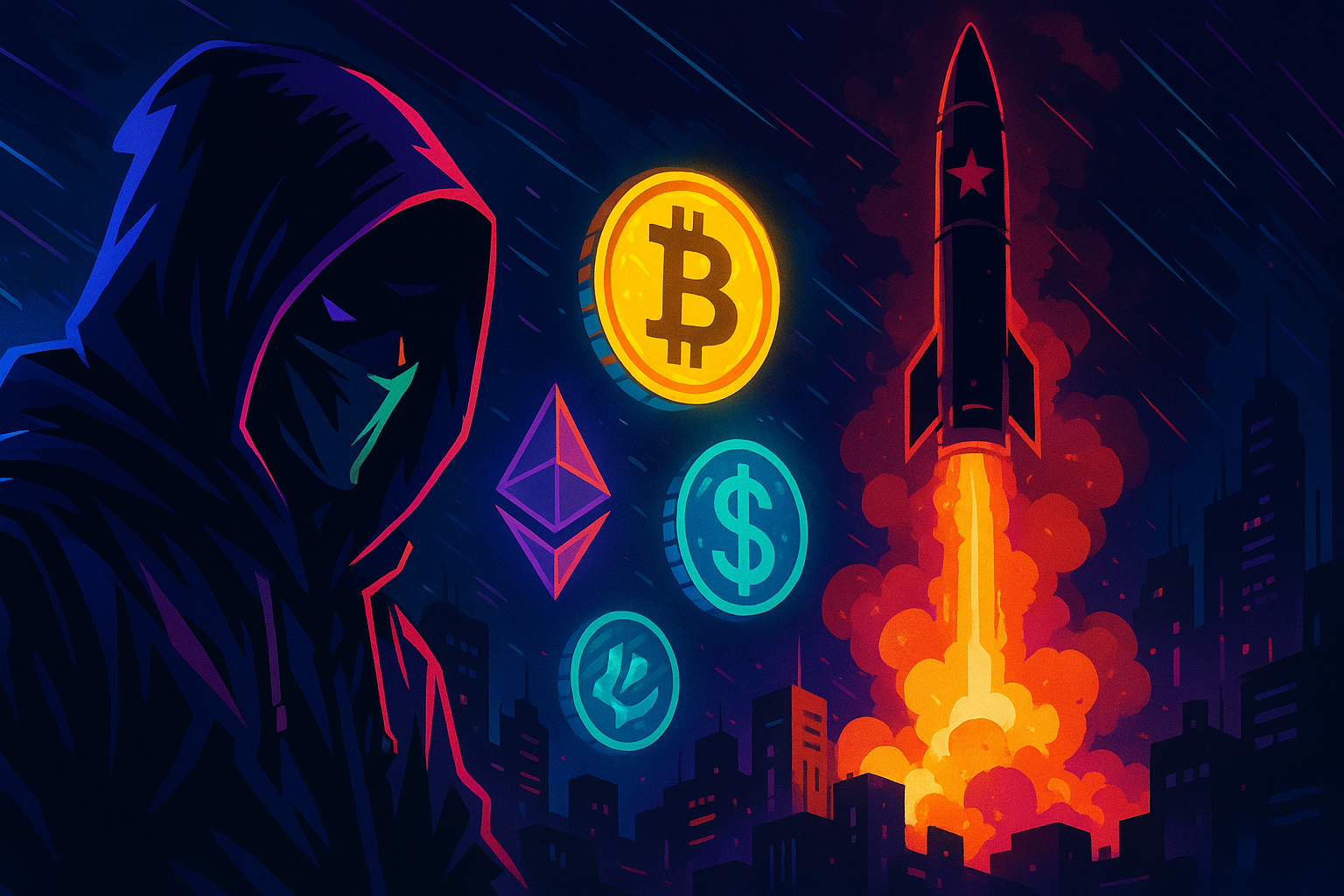
The G7 Just Declared North Korea's Crypto Theft Ring a Nuclear Weapons Program — $6.75B Stolen
$6.75 billion stolen. Zero arrests. And it just got classified as a nuclear threat.
On June 18, 2026, leaders from the world’s seven largest economies sat down at the G7 summit in Évian-les-Bains, France — and officially declared that North Korea’s crypto hacking operations are no longer a financial crime problem. They’re a weapons of mass destruction financing program.
That reframe changes everything.
What the G7 Actually Said
The joint summit statement, released Thursday, called DPRK-linked cryptocurrency theft a “global security threat” and demanded coordinated action across all seven member nations. This isn’t a Treasury press release or a OFAC sanction list update. This is a unified geopolitical declaration from the US, UK, France, Germany, Italy, Japan, and Canada.
The Évian statement rests on three concrete pillars:
- Policy coordination — joint task-force creation and information sharing between intelligence agencies on Lazarus Group activity
- Sanctions enforcement — secondary sanctions pressure on any entity facilitating laundering for DPRK-linked actors
- Laundering disruption — forcing virtual asset service providers (VASPs) to proactively block transactions from wallets flagged as North Korean
The leaders stopped short of specifying timelines or enforcement mechanisms — a notable gap that critics were quick to highlight. But the political signal is unmistakable: the crypto industry is now on the front line of national security.
The Numbers Are Staggering
According to Chainalysis data cited in the G7 briefing materials:
- $6.75 billion stolen by DPRK-linked actors since 2017 — cumulative all-time total
- $2.02 billion stolen in 2025 alone — a 51% year-over-year increase
- North Korea accounted for 64% of all stolen crypto globally in 2025
- In early 2026, DPRK-linked groups were responsible for 76% of all crypto service losses
Just two attacks in 2026 — the Drift Protocol infiltration and the KelpDAO exploit — resulted in $577 million in losses attributed to Lazarus Group.
For context: North Korea’s entire official GDP is estimated at around $18 billion annually. Their crypto theft operation is generating returns equivalent to roughly 11% of national GDP every year — and it’s accelerating.
What Changes Now
The immediate practical implications for the industry:
VASP blocking mandates are coming. The G7 statement specifically flagged the need for exchanges and wallet providers to proactively screen against DPRK-linked wallet clusters — not just reactively freeze after the fact. Expect this to cascade into FATF guidance and national legislation within months.
Secondary sanctions expand the perimeter. Any exchange or DeFi protocol that processes funds traceable to Lazarus Group operations now risks becoming a sanctions target itself. That’s a massive compliance liability — and a massive compliance hiring opportunity.
Blockchain analytics becomes mandatory infrastructure. Chainalysis, TRM Labs, and Elliptic are already embedded in DOJ and FBI investigations. The G7 statement essentially makes their toolset a regulatory requirement, not a nice-to-have.
Why North Korea Keeps Winning
The inconvenient truth: despite years of sanctions, indictments, and international statements, North Korea’s crypto theft capability has grown, not shrunk.
Lazarus Group’s operational security is elite — they use multi-hop laundering chains, compromised developer accounts for supply-chain attacks, and AI-generated fake employees to infiltrate crypto teams from the inside (the Drift six-month infiltration being the clearest example).
The G7 statement acknowledges this asymmetry. Seven of the world’s richest nations are struggling to stop what is, structurally, a state-funded APT group with no extradition risk and a WMD incentive to keep going.
Why This Matters for Crypto Jobs
The G7 statement is a hiring mandate in disguise.
Every pillar of the Évian framework — sanctions enforcement, VASP screening, laundering disruption — requires humans to build and run the infrastructure. Specifically:
- Blockchain forensics analysts at exchanges, analytics firms, and government agencies — demand is spiking
- AML compliance officers with crypto-native experience — the rarest and highest-paid compliance role in the market
- Security engineers specializing in DeFi protocol auditing and insider threat detection
- Policy and regulatory affairs leads who can translate G7 obligations into internal compliance programs
- Incident response specialists who understand cross-chain tracing and DPRK attack patterns
If you have any combination of crypto experience + compliance + security, your skills just became geopolitically relevant. G7-level political pressure means budget opens up fast — both in the private sector (exchanges racing to get compliant) and in government (agencies staffing up crypto enforcement units).
The irony: every dollar North Korea steals is creating multiple jobs on the other side of the equation.
The Bottom Line
North Korea has built the world’s most effective state-sponsored crypto theft machine, and it’s funding nuclear missiles. The G7 just made that officially everyone’s problem. Expect regulatory pressure on exchanges to accelerate sharply in H2 2026, with VASP screening requirements, secondary sanctions expansion, and coordinated law enforcement operations likely before year-end.
For builders, traders, and job-seekers in crypto: the compliance era isn’t coming. It’s here.
Looking for your next role in crypto compliance, security, or blockchain analytics? Browse open positions on Cryptogrind — the job board built for crypto professionals.


Discussion
Comments are powered by GitHub. Sign in with your GitHub account to chime in.