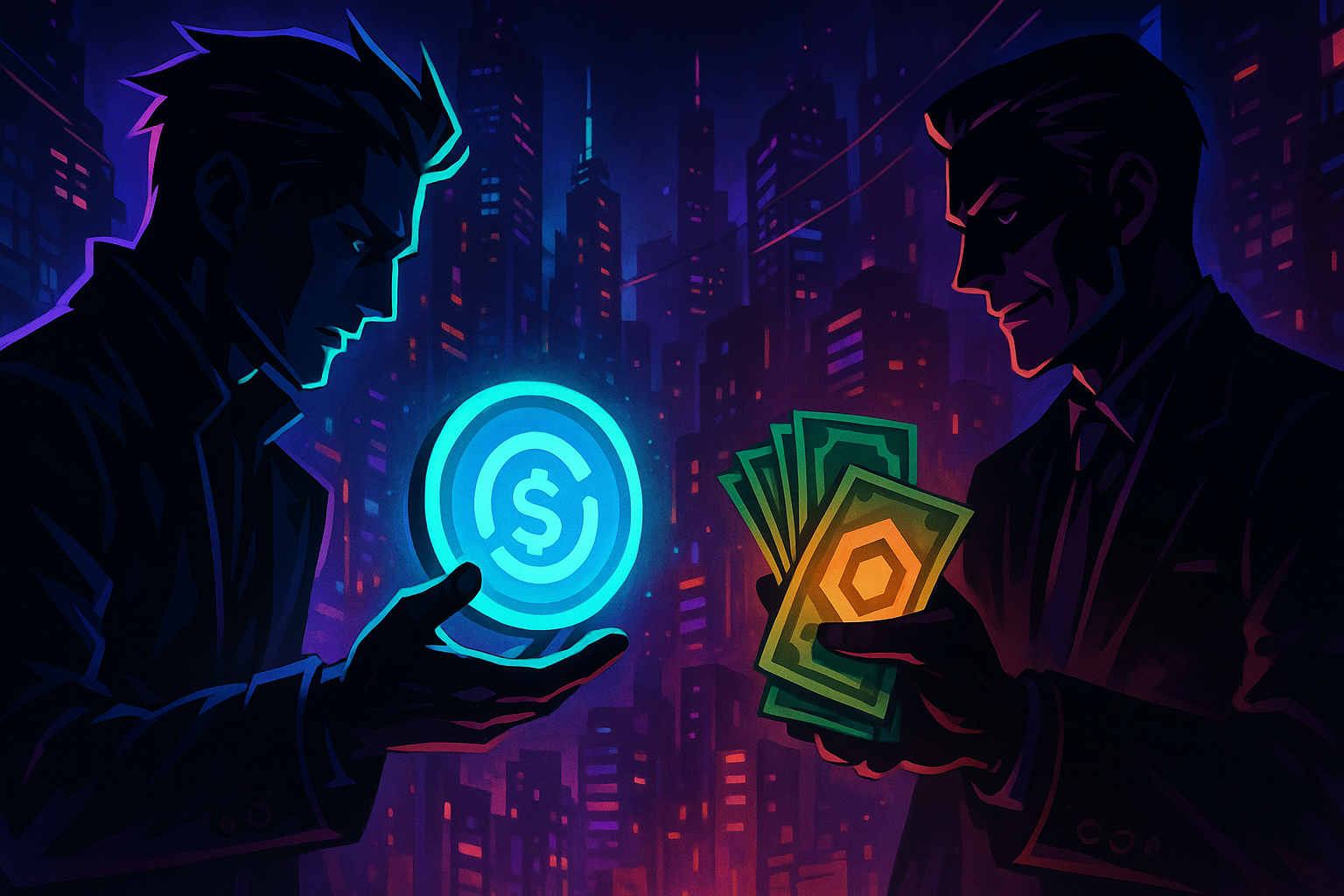
Circle Pays Binance Every Month to Push USDC. Now Binance Owns $100M of Circle, and the Filing Landed the Same Day the Sanctions Probe Leaked
In November 2024, Circle paid Binance a reported $60.25 million upfront, plus monthly fees, to promote USDC.
On September 17, 2026, the money went the other way. Binance bought $100 million of Circle stock.
On September 22, Circle filed the 8-K telling the market about it. That was the same day Bloomberg reported that Manhattan federal prosecutors and the Justice Department’s Criminal Division are investigating whether Binance knowingly let trading that violated Iran sanctions continue on its platform.
So the NYSE-listed issuer of USDC now counts, among its shareholders, an exchange that pleaded guilty to sanctions violations in 2023 and is reportedly under a new sanctions investigation. And Circle still pays that shareholder every month.
What the 8-K Actually Says
Circle’s Form 8-K, signed by General Counsel Sarah K. Wilson, lays out two deals signed the same day, September 17:
- The stock sale. Circle issued 1,237,011 Class A shares to Binance at $80.84 each, for $100 million in proceeds. Several outlets put that at roughly a 5% discount to Circle’s September 17 close of $85.09. It was a private placement, so the shares are unregistered.
- The lockup. Binance cannot sell, pledge, hedge or swap the shares for up to two years. It keeps full voting rights.
- The commercial deal. A new five-year agreement replaces the November 2024 and August 2025 deals. Circle pays Binance “a monthly incentive fee representing a percentage of the amount of USDC held through the Modular Smart Contract Wallet infrastructure service.” Binance agrees to promote USDC on its platform.
Circle’s press release pitches this as a push into emerging markets. Binance co-CEO Richard Teng: “Our $100 million investment and five-year commitment represent long-duration conviction.” And: “A stable, trusted digital dollar should not be a privilege–it should be available to anyone with a phone.” Circle CEO Jeremy Allaire: “Together, we see incredible opportunities to leverage USDC to expand dollar access, support savings and investment with innovative digital asset products.”
Neither company mentioned the investigation.
The Money Loop
Here is the structure in plain English. Circle earns interest on the reserves behind USDC. It gives part of that to Binance every month, scaled to how much USDC sits in the wallet infrastructure Circle runs for Binance. Binance has now put $100 million of its own money into Circle equity, locked for two years.
The more USDC Binance’s users hold, the bigger Binance’s monthly check from Circle. And now, the more USDC grows, the more Binance’s Circle stake is worth. Binance gets paid on both sides of the same growth.
That stake is already in the green. Circle traded between about $93.48 and $94.33 on September 22, per Schaeffer’s and Benzinga. At that price Binance’s 1,237,011 shares are worth roughly $116 million, a paper gain of about $15.6 million in five days. Binance cannot touch it for up to two years, but it counts.
Circle, for its part, gets $100 million in cash and five years of committed distribution on the largest exchange in the world. USDC sits at roughly $75 billion in circulation, well behind Tether’s USDT, and Binance is where the global order books live. From Circle’s side of the table, the deal makes sense.
The Timing
Line up the dates:
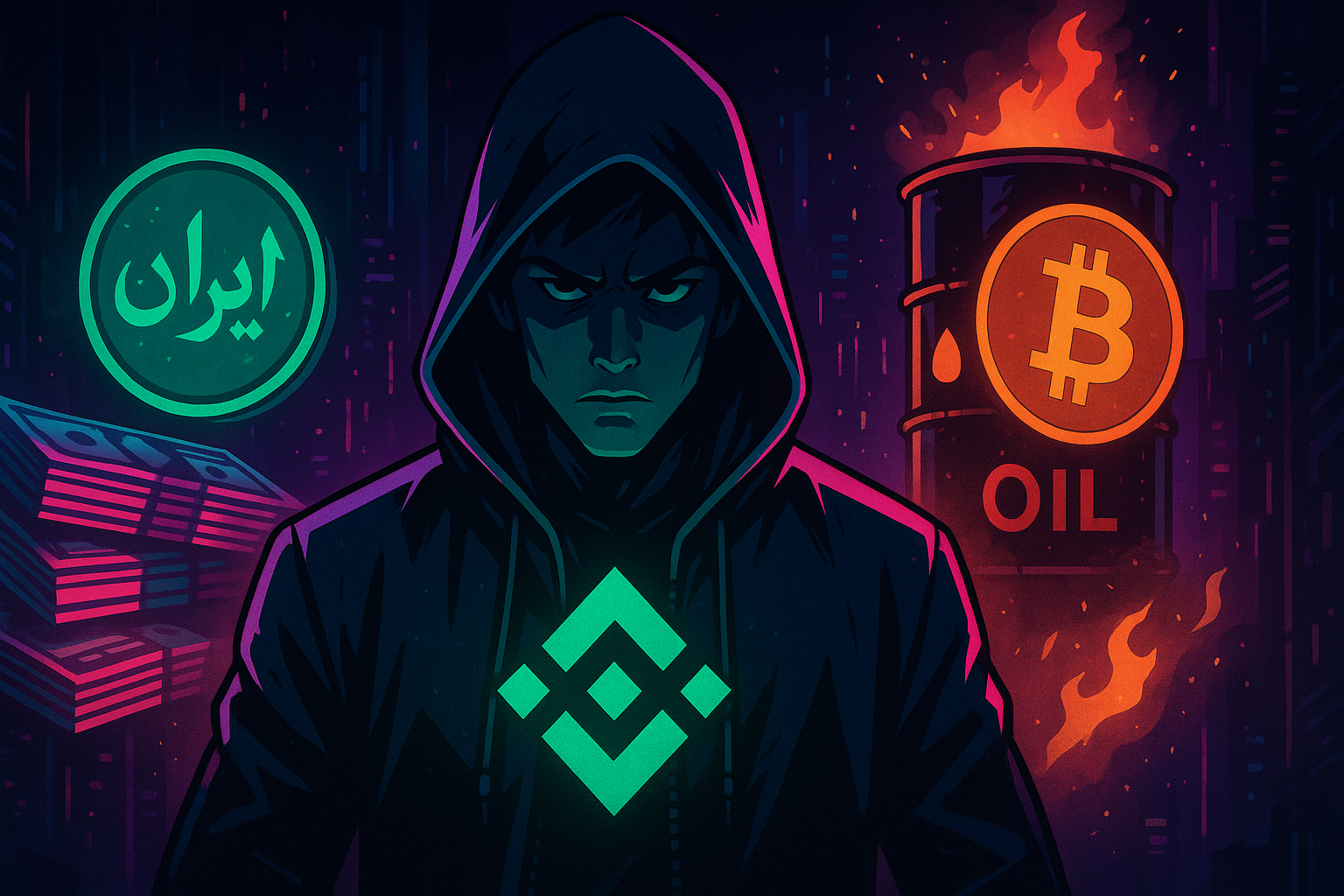
- September 15: The US Attorney’s Office for the Southern District of New York files to forfeit about $61 million in Iranian oil proceeds that two Chinese companies allegedly moved through Binance trading accounts. We covered that case and the probe here.
- September 17: Circle and Binance sign the five-year deal. Binance buys the stock. The placement closes the same day.
- September 22: Bloomberg reports the same Manhattan office is investigating Binance itself. Circle files its 8-K. The press release goes out.
There is no evidence the deal was timed around the probe, and no public indication Circle knew about the investigation when it signed. Companies have four business days to file an 8-K, and September 22 was day three.
But Circle did not need to be told. The forfeiture complaint was public two days before signing. The Wall Street Journal had reported in February that Binance’s own compliance team flagged about $1.7 billion moving from Chinese clients to Iran-linked wallets. Binance has disputed that reporting and is suing the Journal’s publisher for defamation. Either way, Circle signed a five-year deal and took $100 million from Binance with all of that already on the record.
The Exit Doors
The 8-K contains two clauses worth reading twice.
First: “The Company and Binance may each unilaterally terminate these arrangements prior to the expiration of their terms upon the occurrence of certain specified events.” The filing does not say what those events are. Circle did not attach the agreement as an exhibit. Whether a criminal charge, a new plea, or a sanctions designation counts as a “specified event” is not public.
Second: the lockup ends early on “a termination of the commercial arrangements by Binance under certain circumstances,” and it carves out “dispositions required by applicable law or governmental order.”
Translation: if a court or regulator ever orders Binance to dump the stake, it can. If Binance walks from the commercial deal under certain conditions, the lockup ends and it is free to sell. Standard lawyering, and also exactly the clauses you would want if you thought the relationship might not last five years.
None of this establishes wrongdoing by anyone. An investigation is not a charge, and Binance says it maintains “a zero-tolerance policy for sanctions violations.” But Circle has built its whole brand on being the stablecoin issuer that regulators trust. It just tied five years of that brand, and a line on its cap table, to a company that has to answer a federal prosecutor’s question about what it knew.
Why This Matters for Crypto Jobs
Stablecoin distribution is turning into the biggest business development game in crypto, and deals like this decide where the jobs go.
- Stablecoin BD is a real career now. Circle pays exchanges to hold and promote USDC, and now exchanges are buying equity back. Structuring incentive fees, lockups and five-year distribution deals takes people who understand token economics and corporate finance. Circle, Tether, Paxos and every bank-issued stablecoin project are hiring partnerships leads who can do both.
- Counterparty risk is a compliance job, not just a legal one. Someone at Circle had to sign off on taking $100 million from a company two days after a forfeiture complaint named its accounts. Issuers, custodians and payment firms need people who can run counterparty due diligence on partners, not just customers. Former bank KYB, sanctions and third-party risk people are in demand.
- Emerging markets are the target. Both companies say the deal is about dollar access in emerging markets. That means local licensing, on/off-ramp partnerships and regional compliance, often in places where sanctions exposure is highest. If you speak the language and know the regulator in Turkey, Nigeria, Brazil, Vietnam or the Gulf, stablecoin companies want to talk to you.
- Investor relations for crypto-native public companies is growing. Circle has to explain this deal to NYSE shareholders during a week when its new investor is in the news for the wrong reasons. Public crypto companies need IR, disclosure and securities-law people who can handle both the SEC and Crypto Twitter.
- Do your own diligence on offers. If you are weighing a role tied to Binance’s USDC push, ask how the deal would survive a second criminal case. The answer lives in “certain specified events,” and it is fair to ask about in an interview.
Circle used to pay Binance to hold its dollars. Now it pays a shareholder. Browse the latest crypto and Web3 jobs on Cryptogrind, including stablecoin, partnerships, compliance and investor relations roles at companies building the rails that deals like this run on.
Discussion
Comments are powered by GitHub. Sign in with your GitHub account to chime in.