Trump's Stablecoin Has a Secret Freeze Button. Justin Sun Just Found Out the Hard Way.
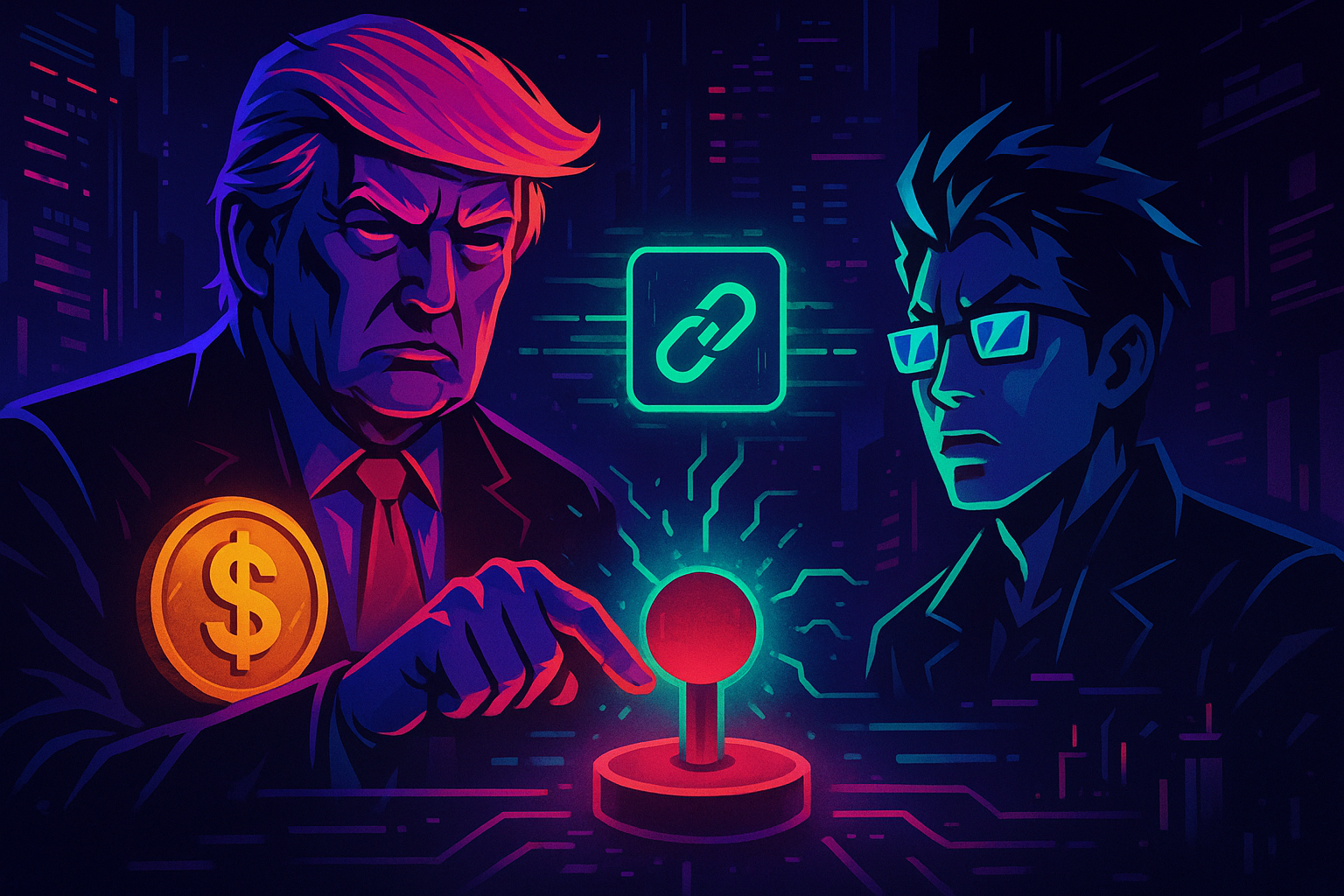
There’s a freeze button hidden inside Trump’s stablecoin. And someone just pressed it on Justin Sun’s exchange.
On June 7, HTX — the crypto exchange where Justin Sun sits on the Global Advisory Board — announced it was delisting USD1, the stablecoin issued by Donald Trump’s World Liberty Financial (WLFI). The reason: WLFI unilaterally froze on-chain addresses belonging to HTX, citing a “sanctions compliance review,” without warning, without legal basis, and without due process.
HTX’s response was blunt: “The WLFI project team’s unilateral freezing of these addresses — conducted without sufficient prior communication, adequate contractual or legal grounds, transparent disclosure, or adherence to due process — directly infringes upon the legitimate rights and interests of HTX users.”
The exchange gave users 48 hours. All USD1 balances will be converted to USDT at a 1:1 ratio. USD1 is no longer welcome on HTX.
The Backstory: This War Has Been Running Since 2025
This isn’t a random dispute. It’s the latest round in a multi-front legal brawl between Justin Sun and the Trump family’s crypto operation.
It started in September 2025 when WLFI blacklisted Justin Sun’s personal wallet after he moved approximately $9 million in WLFI tokens to various addresses — including HTX. WLFI accused him of breaking token sale rules through alleged transfers, short-selling, and straw purchases. Then came the freeze: 540 million of Sun’s unlocked WLFI tokens were locked without notice.
Sun fired back in April 2026 with a federal lawsuit filed in California. The lawsuit alleged breach of contract, fraud, and conversion — but more importantly, it exposed something buried in WLFI’s smart contract code: an admin-controlled blacklist function that allows WLFI to unilaterally freeze any wallet’s ability to transfer, sell, or interact with the protocol. No warning. No consent. No oversight.
Sun alleged the freeze served dual purposes: pressure him into minting $200 million worth of USD1 on the Tron blockchain, and prevent one of the largest WLFI holders from selling — which would have suppressed token price.
WLFI countersued for defamation.
Why Now? UK Sanctions Gave WLFI Cover
The June 7 HTX address freeze was not random. On May 26, 2026, the British government imposed sanctions on HTX (the former Huobi Global) for potentially providing financial services to the Russian government. That gave WLFI a compliance pretext to invoke the freeze function on HTX-linked addresses.
Whether the sanctions legally justified the action is now disputed. HTX says no legal or contractual grounds exist. WLFI hasn’t publicly responded to the specific allegations.
HTX says it is “reviewing measures including legal action” to protect user rights and interests.
The Bigger Problem: Stablecoins Can Be Weaponized
This fight isn’t just about two billionaires going to war. It’s a live demonstration of a structural risk that DeFi purists have warned about for years: permissioned stablecoins can be used as financial weapons.
USD1 is a centralized stablecoin. Like USDT and USDC, the issuer retains the ability to freeze addresses — theoretically for compliance purposes, but in practice, for any reason the issuer chooses. The WLFI smart contract allegedly goes further, embedding a backdoor that can freeze token holders with zero disclosure.
When that power is wielded by a politically connected entity against a rival with a pending lawsuit, the distinction between “compliance tool” and “retaliation mechanism” disappears.
Tether has frozen wallets under court orders. Circle has cooperated with OFAC. But this is the first high-profile case where a stablecoin issuer appears to have used its freeze function in the middle of active litigation against the person being frozen.
The Numbers
- $9M — WLFI tokens Justin Sun moved in September 2025, triggering the initial blacklist
- 540 million — WLFI tokens frozen in Sun’s wallet, subject to the California lawsuit
- $200M — the USD1 mint on Tron that WLFI allegedly tried to pressure Sun into
- June 7, 3:00 UTC — when HTX’s USD1 markets went dark
Why This Matters for Crypto Jobs
The HTX-WLFI freeze fight is creating immediate demand for a specific set of roles:
Compliance and legal — every centralized stablecoin issuer now faces pressure to publish clear freeze policies. Exchanges need compliance architects who understand sanctions law intersecting with on-chain asset management. HTX alone has to navigate UK sanctions, OFAC requirements, and now a potential California lawsuit.
Smart contract auditors — the WLFI backdoor revelation confirms what security researchers have been saying: backdoor freeze functions are routinely buried in governance contracts and go unnoticed until they’re used. Projects are now scrambling to audit their own token contracts before the next controversy.
DeFi protocol engineers — decentralized stablecoin projects (MakerDAO/Sky, Liquity, Frax) are seeing renewed interest as the “censorship-resistant” alternative. Engineers who understand collateralized debt positions and algorithmic stability mechanisms are suddenly in high demand.
Policy and government affairs — Trump’s WLFI is now directly entangled with UK sanctions, US litigation, and cross-border exchange operations. Crypto companies operating internationally need people who can navigate multi-jurisdictional compliance in real time.
The freeze fight will end in a courtroom or a settlement. But the underlying question — who controls the off switch on your stablecoin — just got a lot harder to ignore.
Looking for your next move in crypto compliance, DeFi development, or smart contract security? Browse open roles at cryptogrind.com — the job board built for crypto builders.
Discussion
Comments are powered by GitHub. Sign in with your GitHub account to chime in.